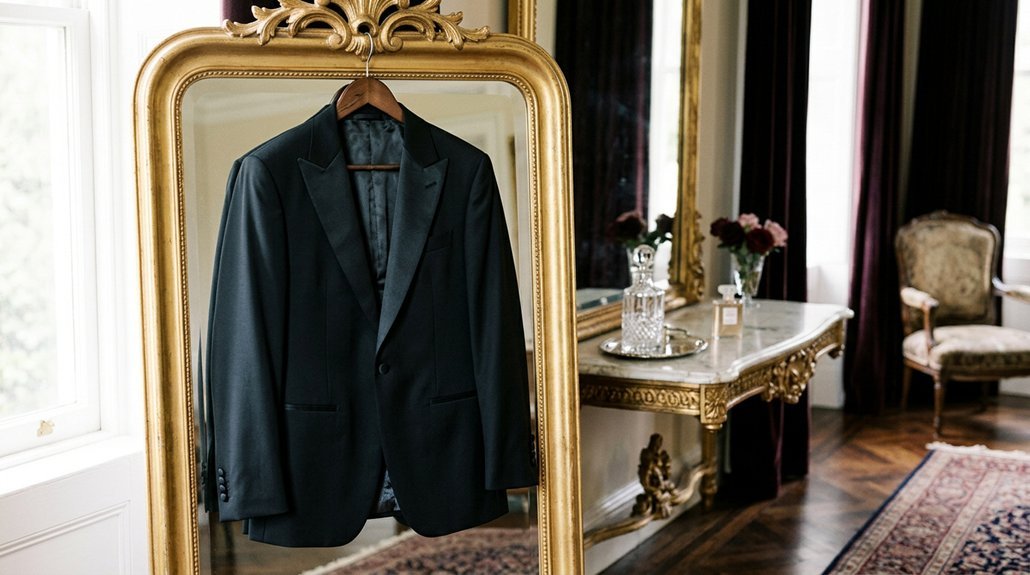
Black-tie events generate over $9 billion annually in formalwear sales, yet most men still show up looking like they raided their dad’s closet. You’re smarter than that.
The difference between blending in and commanding the room comes down to ten specific choices, not luck or budget. Get ready to build a look that actually works.
What “Black-Tie” Actually Means (And What “Optional” Changes)
So you’re staring at that invitation, right? It says “black-tie” and your stomach drops. Here’s what you’re actually dealing with.
The Non-Negotiable Core****
Black-tie means one thing: a tuxedo paired with a black bow tie. That’s your foundation, period. This isn’t business casual spruced up, and it’s not wedding-guest vague. You’re signaling respect for the host and the occasion through formal attire that hits a specific, elevated register. More formal than your sharpest boardroom look, less ceremonial than white-tie state dinners.
A tuxedo and black bow tie: non-negotiable, elevated, and always respectful.
Where “Optional” Shifts Things
Now, black-tie optional**? That’s where hosts throw you a lifeline. You can relax, but carefully. Think well-cut jumpsuits, rich midi dresses, or carefully tailored dark ensembles that still suggest good taste. Always check moodboards** the host provides, or simply ask what’s expected. No shame in clarity!
Tuxedo or Dark Suit: Which Foundation Do You Need?
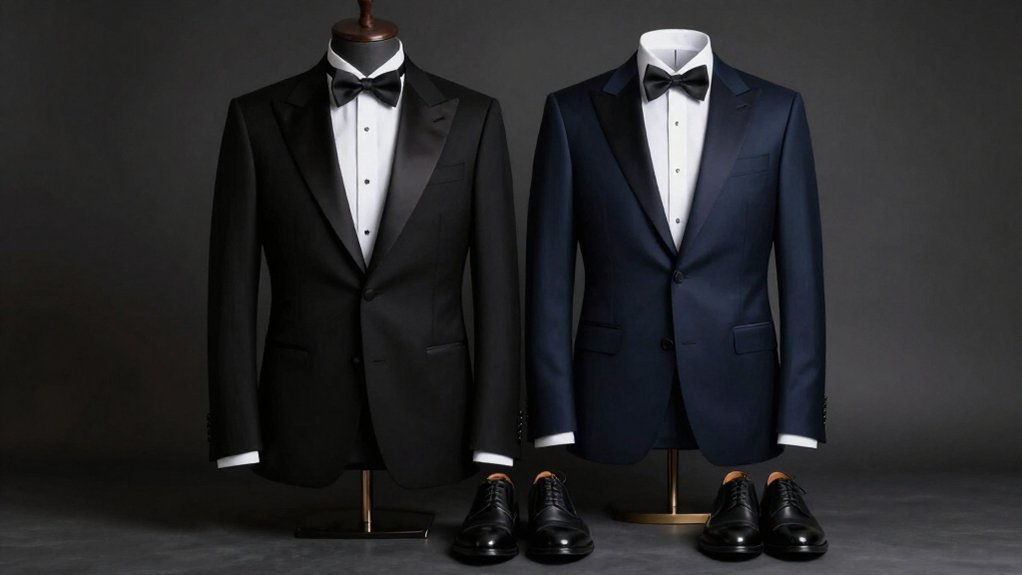
Exactly how formal is this thing, really? That question determines whether you’re reaching for a tuxedo or a dark suit tonight.
The dress code hierarchy is clear: true black-tie demands a tuxedo, that smooth dinner jacket with satin lapels and matching trousers bearing that signature stripe. It’s the gold standard of formal attire. A dark suit, black or midnight navy, works only when you see “optional” attached, or the event leans less traditional.
You’ll want wrinkle-resistant wool either way, tailored clean without fuss. But here’s where they diverge:
- Tuxedo: Patent leather shoes, minimal accessories, optional cummerbund
- Dark suit: Understated footwear, simpler everything, no shine
- Both: Perfect fit beats flash every single time
Know your audience, dress accordingly, and you’ll own the room.
The White Shirt That Earns Its Place
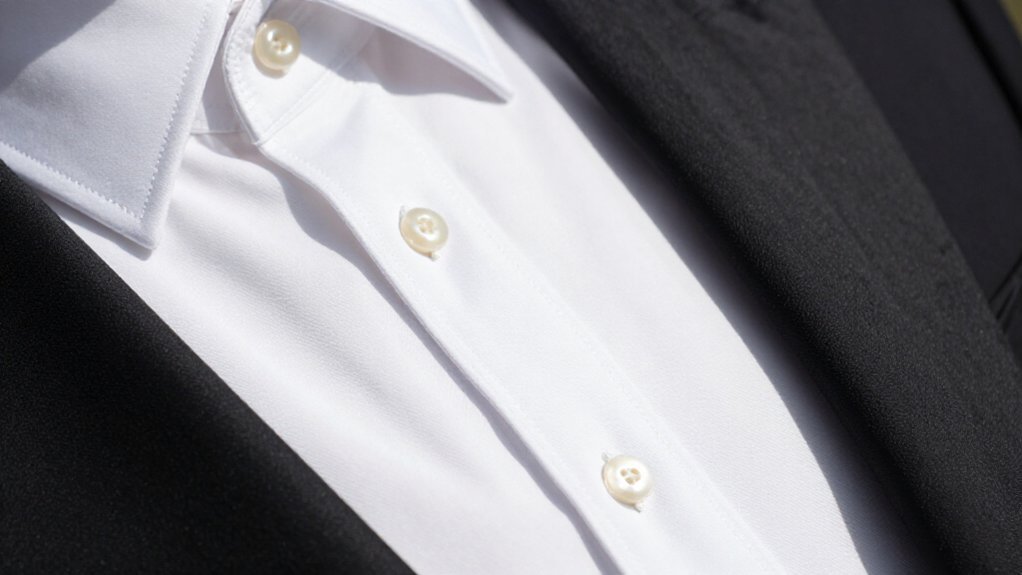
Why does one white shirt outrank every other in your closet? It earns its place through pure, purposeful design!
The Marcella Difference****
You need a white shirt built specifically for black-tie attire. Look for the Marcella bib front, that crisp textured panel that catches candlelight beautifully. Pair it with a turndown collar and French cuffs, and you’ve got the real deal.
Skip your everyday office button-down. Sure, it’s permissible, but you’ll sacrifice formality. This isn’t the moment for shortcuts!
The Complete Picture
You wear this shirt with your tuxedo, naturally. Fasten those French cuffs with proper cufflinks, matte black or mother-of-pearl, and add your black silk bow tie. That pristine white against midnight wool? Perfect contrast. Clean, classic, unforgettable.
Why the Bow Tie Defines the Dress Code
You can’t fake black-tie credibility without mastering the bow tie’s legacy, its craftsmanship, and its fabric. This iconic accessory carries centuries of evening-wear tradition. It demands your hands (not a clip) for the knot. It rewards silk that catches candlelight just so. Let’s unpack why this small detail says so much about your respect for the dress code.
Historical Symbolism Explained
How did a simple strip of silk become the ultimate symbol of evening elegance? You trace the bow tie’s lineage through centuries of formal attire, where it emerged as the definitive marker separating true black-tie symbolism from lesser dress codes. When you fasten that black silk around your collar, you’re not just accessorizing; you’re participating in a visual language that signals respect for tradition.
The bow tie frames your dinner jacket perfectly, creating that crisp horizontal line against vertical lapels. It’s proportion, it’s balance, it’s the whole package!
Your black-tie essentials rest on three pillars:
- Silk construction: Nothing else catches candlelight quite like it
- Hand-tied authenticity: Pre-tied versions miss the character, the soul
- Proper scale: Width must echo your lapel, your face, the entire ensemble
You wear history. You wear intention. You wear the code.
Proper Tying Methods
Because a hand-tied bow tie isn’t just neckwear, it’s your entrance ticket to black-tie credibility. You’re committing to the craft here, and guests notice the difference.
Master the tying method
Start with the bow formed against your collar, loop the long end around, then adjust for symmetry. Tighten until you’ve got that snug, balanced knot sitting pretty. It takes practice, sure, but the payoff is unmistakable polish.
Pair it right
Your bow tie demands a white dress shirt with a Marcella bib front, turndown collar, and French cuffs. Anything less undermines the whole operation.
What to skip
Pre-tied versions read lazy, regular neckties break the code entirely, and a visibly untied bow? That’s a credibility killer. Nail this element, and your formal attire commands instant respect.
Material Quality Matters
- Silk bow tie: Hand-tied, lustrous, never pre-tied plastic
- Wool dinner jacket: Dense, breathable, structured shoulders that command rooms
- Midnight blue velvet: A daring, modern flex when executed with restraint
Fabric quality isn’t snobbery; it’s strategy. You feel the difference immediately, and so does everyone else. Skip the costume-grade stuff. Invest once, wear confidently forever.
The Black-Tie Waist: Cummerbund, Waistcoat, or Neither
You’ll want to nail your waist game for that clean tuxedo silhouette, right? Grab a cummerbund for clean coverage, wear a waistcoat to dial up the formality, or go bare for that crisp, uninterrupted line from jacket to trousers.
Whatever you pick, just remember: no belts here, friend. Side adjusters or braces keep things sharp under that dinner jacket!
Cummerbund Functionality Explained
Why does the black-tie waist matter so much? You’re crafting a smooth formal silhouette, and the cummerbund delivers exactly that. This narrow sash wraps your waistline, hiding the shirt bunching beneath your jacket buttons while adding finish to your tuxedo ensemble.
- Pleats upward: They catch the light and draw eyes to your narrowest point, balancing proportions beautifully
- Color discipline: Black or midnight blue maintains that crisp formal contrast black-tie demands
- Beltless freedom: You ditch bulky belts entirely, keeping lines clean and uninterrupted
The pleats face up for a reason, friend: tradition meets function. You’re not just wearing an accessory, you’re shaping your entire presence. Skip it? You’ll want side adjusters or braces keeping everything lifted. But why would you? The cummerbund turns good into exceptional.
Waistcoat Alternative Option
Where exactly does the waistcoat fit into your black-tie equation? It’s your premium alternative to the cummerbund, adding serious depth to your formal wear arsenal.
The Waistcoat Advantage
You’re stacking an extra vest layer, yes, but you’re also opening up serious style potential. That breast pocket? Perfect real estate for a crisp pocket square pop.
Choosing Your Waist Direction
| Cummerbund | Waistcoat |
|---|---|
| Streamlined, pleats up | Structured, layered look |
| Jacket stays closed | Jacket open or closed works |
Pro Styling Tips
Pair your waistcoat with a classic white shirt and proper bow tie. You’ll coordinate cufflinks and that pocket square for pure cohesion. The waistcoat reads slightly more traditional than any cummerbund, and that’s exactly the point.
You’re building a look with intention. The waistcoat delivers.
Going Without Either
Strip it back, and you’re left with something surprisingly sharp. You’re skipping the cummerbund and waistcoat entirely, and honestly? It works. You’re trusting your tailored jacket to do the heavy lifting, keeping that shirt-front covered when buttoned. It’s clean, modern, and breathable.
Here’s how you nail it:
- Keep your trousers high-waisted and secure; no gaps, no fuss
- Add a coordinated pocket square to maintain visual balance without bulk
- Check with your host first; some traditional events expect that middle layer
You’re proving that black-tie doesn’t demand extra fabric to feel formal. When your silhouette stays balanced and your jacket fits beautifully, you’re not missing anything. You’re just choosing confidence. Sometimes, less truly is the power move.
Shoes That Won’t Sink You on the Dance Floor
Your formal footwear needs to work as hard as you do. Stick with patent leather oxfords or Derbies in black, very dark brown; they’re neat, classic, and photograph beautifully under ballroom lights.
Skip the loafers, suede, chunky soles entirely; they break the dress code instantly. Velvet slippers? Acceptable, sure, but tricky on grass or gravel.
Here’s the fix: check your sole grip before you leave. Scuffed bottoms mean embarrassing slides. Keep them clean, keep them polished, and you’ll move through every waltz, twist, or awkward shoulder shimmy with absolute swagger!
The Only Accessories Worth Adding
Why overcomplicate perfection, right? You’ve got the foundation locked down, now let’s talk finishing touches. You’ll want to keep things restrained, because restraint is what separates the pulled-together from the try-hards.
Your black bow tie is non-negotiable: silk, hand-tied if you’ve got the chops (though a quality pre-tied won’t sink you). Pair it with cufflinks on your French cuffs; they’re functional jewelry that actually serves a purpose.
Here’s your shortlist:
- A crisp white pocket square, folded just so, never loud
- Slim dress watch with a black leather strap, nothing bulky or showy
- Optional cummerbund or waistcoat for that streamlined silhouette
That’s it. No novelty ties, no statement rings. You’re building quiet confidence, not a costume. Let the cut of your jacket do the heavy lifting.
How Tailoring Matters More Than Price
You’ll quickly see that fit defines elegance far more than any price tag ever could. A skilled tailor turns even budget garments into showstoppers, nipping waists and perfecting sleeve length so your jacket, shirt, and accessories work in harmony. Spend on alterations, not bigger receipts, and you’ll command the room with presence that money alone can’t buy!
Fit Defines Elegance
How does a $3,000 tuxedo look cheaper than a $500 one? Poor tailoring kills expensive fabric faster than anything. You need clean shoulder lines, a snug chest, and sleeves showing exactly 1/4 inch of shirt cuff. That’s your baseline.
Shoulders must sit flat, no bunching or overhang, period. Trousers break softly over the shoe with precise rise and inseam. Back vents or darts maintain that streamlined silhouette you’re after.
Even premium wool won’t save a sagging waistband or pulling torso. You must budget for alterations: seat, waist, sleeve length. Skip the ultra-structured cuts. Choose a fitted or slim option off-the-rack, then invest in professional tailoring. The silhouette matters more than the price tag. Trust me on this one.
Alterations Transform Garments
That $500 tux you’re eyeing? It’ll never compete with a $200 rental that fits like a dream. Here’s the truth: tailoring matters more than price, period.
Why Alterations Change Everything
You need precise shoulder, waist, and sleeve measurements to create that clean silhouette. Key alterations include adjusting sleeve length to show a fraction of shirt cuff, hemming trousers for the right break, and taking in the waist. For Marcella bib fronts, align collar height and cuff lengths with your jacket to avoid bunching.
Smart Tailoring Moves
Insist on modular adjustments. Seat and seat-to-hem tweaks improve comfort while dancing. Demand fabric-preserving alterations and return-to-factory tailoring checks to maintain lapel roll, pocket alignment, and button placement. Get the fit right, and you’ll own the room.
Proportion Creates Presence
Why drop four figures on Italian silk when the shoulders sag and the sleeves pool at your wrists? You’re smarter than that. Great tailoring beats expensive fabric every single time, because proportion creates presence that no price tag can fake.
You’ll command the room when your silhouette works with you, not against you. A cinched waist, clean trouser break, and sleeves that actually show your cufflinks turn budget basics into black-tie brilliance. It’s the fit that photographs well under chandeliers, the fit that moves gracefully across marble floors.
- Shoulder alignment: anchors your entire jacket’s drape
- Proper break: eliminates pooling fabric at your ankles
- Adjusted posture: keeps satin stripes and lapels perfectly parallel
Skip the upgrade, invest in the tailor. You’ll look like you spent thousands without the receipt to prove it.
Mistakes That Undermine Your Entire Look
And those colors? You went burgundy, midnight blue in the wrong light, or worse, a black suit instead of actual black tie. When you’re uncertain, trust the standard: black wool, satin lapels, white shirt, black shoes. No loafers, no cotton, no shortcuts. You know better!
Adapting Black-Tie for Weddings, Galas, and Ceremonies
Where exactly are you headed? Your tuxedo and bow tie combo works everywhere, from candlelit weddings to charity galas. You’ve got options. Women rock formal gowns in silk, velvet, or satin as the classic move, though sleek jumpsuits pass when hosts chill the dress code slightly.
Watch for clues. Heavy cardstock, wax seals, calligraphy: these scream “don’t mess this up.” When you’re unsure, just ask. Seriously.
Match your accessories to the occasion’s tone; cufflinks and slim watches win, flashy jewelry loses. Consider lightweight wool or a crisp white dinner jacket for summer ceremonies; you’ll stay cool without looking casual. Verify ambiguous dress codes directly with hosts; they’ll appreciate your attention to detail.
You’re dressing for memories, not just the moment. Nail it, and you’re golden.